I have a thing about workboats. Whenever we're
near the ocean, I like to prowl the local harbor with a camera. Workboats are one of my favorite photographic subjects, whether they’re
pangas hauled out on a beach or trawlers tied to a dock. As a kid, I learned to paddle a canoe and row a dinghy on the
Delaware River in northern New Jersey. When I was a teenager, our family
vacationed on Lake Ontario where my father and I fished out of an aluminum
skiff with a small outboard motor, which he taught me to operate and let me run
it into town by myself. As a marine scientist, I worked on commercial fishing
boats and research ships from dories and seine skiffs to coastal and offshore oceanographic
vessels. While we lived in southern California, I co-owned a 24-ft Skipjack
with two diving buddies; we took it to the Channel Islands most weekends from May to October to hunt white seabass and yellowtail. Now I’m relegated to a sit-on-top
kayak that I carry on the roof of the truck. Maybe, when
we’re settled, there will be a bigger boat in my future.
Wednesday, March 16, 2016
Working Boats
Labels:
Ballard Locks,
bridge,
commercial fishing,
Ed Ricketts,
fishing,
history,
John Steinbeck,
Port Townsend,
Puget Sound,
transportation,
U.S.,
Washington,
Western Flyer,
Whidbey Island,
workboats
Friday, February 26, 2016
The Road North (Part 2)
…runs through mountains and along rivers and took us from northern New Mexico to Washington state. We drove north from Taos into the San
Luis Valley in Colorado and then over La Veta Pass to Interstate 25 to northern Colorado, a route we've traveled many times. Our household goods are in storage there
and we stopped to swap our summer clothes for warmer jackets and rain gear.
![]() |
| Sawtooth Scenic Byway, Idaho |
Labels:
Columbia River,
Craters of the Moon National Monument,
dams,
descanso,
fire,
fish,
fishing,
hiking,
Idaho,
northern pikeminnow,
Oregon,
rivers,
Sawtooth Mountains,
U.S.,
Washington
Tuesday, January 26, 2016
The Road North (Part 1)
…runs through New Mexico. In late August, I left Loreto in Baja California Sur and drove 1,100 miles to Taos where Rande had spent the summer. Our plan was to drive to Whidbey Island in northern Puget Sound to visit her family, but first I had to deal with an ear problem. On what turned out to be my last dive of the summer in the Sea of Cortés, I had what diver’s call reverse squeeze – a sharp pain in one ear as I returned to the surface. I couldn’t equalize (reduce) the air pressure in my ear with the pressure of the surrounding water.
The next day, I went to the emergency clinic in Loreto and
learned that I had an infection in one ear. The doctor, a young woman who
spoke some English, gave me a prescription for antibiotic ear drops and told me
to stay out of the water for two weeks. My summer of diving was over. Before
leaving Mexico, I made an appointment online for an ear specialist in northern
New Mexico. When I arrived at his office in Taos a week later, the infection
was gone, but he sent me to a clinic in
Los Alamos to test for a tear in the eardrum. They pressurized the outer ear and waited; a decline
in pressure indicates a tear. I passed the test; I could go back in the
water.
![]() |
| Rio Grande south of Taos, New Mexico |
Friday, December 25, 2015
Morning in Santa Rosalía
I spent last summer in Nopolo in Baja California Sur diving
the islotes and headlands that I could reach with my kayak. I dove early in the
morning, the coolest part of the day, and often saw the sunrise from the
Transpeninsular Highway on my way to places where I could launch a boat. The Sea of
Cortés was warm (low 80s°F) and gin-clear (visibilities greater than 40-50 ft).
By mid-afternoon the heat was oppressive, weighing on me like a thick blanket;
I spent them studying Spanish by the pool or visiting friends in homes where
air conditioners and fans ran all day.
![]() |
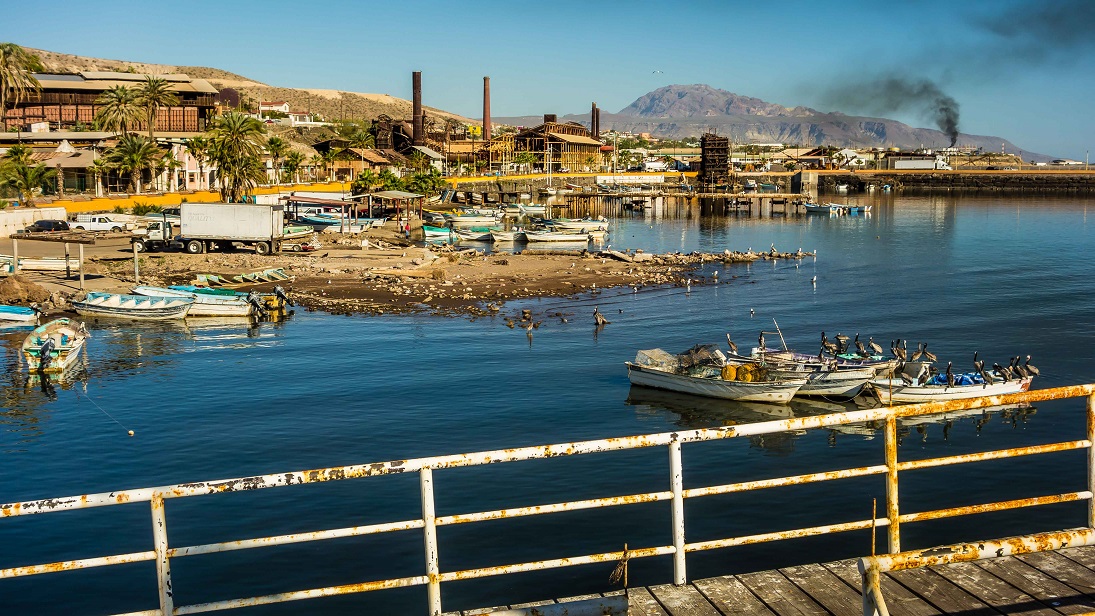
| Santa Rosalía harbor with abandoned copper smelter (tall smokestacks) |
Several divers told me that the best visibility in the
Sea of Cortés occurred during the summer and I had to find out if that was true.
The heat of Mexico in the summer was too much for Rande; she spent it at 7,000
feet in northern New Mexico looking for a place for us to live. We’ve been on the
road since we sold our house in northern Colorado in 2013 and she was tired of
living out of a truck always on the go. Near the end of the summer, with her father seriously
ill, the plan was for me to return to New Mexico, meet Rande and drive us to Washington
to be with her family.
Subscribe to:
Posts (Atom)